
WhirldWorks Farm
A small homestead and Debouillet sheep farm in Central Texas
Top ten gifts for the homestead wife

When it comes to equal rights, neither man nor woman gets a day off on the homestead. A wife on the homestead is to be valued beyond measure as, I can attest, all things would come to a screeching halt without my wonderful wife keeping everything moving forward in the right direction. If ever there was a person on this earth deserving of giving gifts to, it is the homestead wife!
There are far more wonderful gifts a man can give to his wife, but I asked mine to provide me with what she thought would be good gifts for the woman on the homestead. Here below are those ten items (but feel free to buy your wife much more than these things):
Muck Boots


Sun Hat

I’m not familiar with where you live, but where we are, the Texas sun can be a formidable foe.
Kneeling Pad


Garden Gloves

Digging in the flower or vegetable garden is one of the greatest joys of homestead life. Protecting one’s hands is something every homesteader should believe in. Working with our hands is a daily activity so making sure that those fingers are ready for tomorrow is part of today’s responsibilities.

Garden Cart

Moving things around the homestead is a rather routine activity and because of this, moving things around also consumes valuable time that could be spent on other things. Having a garden cart can really help save time by allowing you to move multiple items in one trip. It also makes it much easier to move those heavier items that can cause aches and pains unsuitable for daily life on the homestead.
Food Processor

In case you haven’t noticed, anything that can save time is a treasured item on the homestead. Preparing meals is another of those daily chores that can really consume one’s time. Yes, sometimes it can be very enjoyable, even therapeutic, to slice, dice and chop by hand, but other times you just want to get the job done. A food processor is indeed a valuable time-saver.

Canning Set


Tecnu

If you are prone to being afflicted by poison ivy or poison oak and have never heard of Tecnu, stop what you are doing right now and order some of this miracle nectar of healing proportions! There are so so many poision ivy remedies out there, both herbal and medicinal, but none have been as effective on the dreaded rash as Tecnu has been for us. Nothing stops progress like a case of poison ivy, and so far we have found nothing else that puts a stop to it faster than Tecnu!

Dehydrator

Using a dehydrator is another wonderful method of preserving your hard won garden produce. There are some things that simply don’t can well, or at all, but preserve wonderfully with a dehydrator. These dried foods also make for great snacks when you’re outside working (and they store in your pockets better than a can of peaches!).

Handkerchiefs

You may wonder why the simple handkerchief made it onto a list like this, but I can tell you that this seemingly simple piece of cloth may just be one of the most indispensable items on the homestead. They aren’t just for blowing one’s nose, although that is helpful. The handkerchief can substituted for a hat, it can filter dust, dry the tears of a crying child, wipe off a sweating brow, and can even be handy in emergency first-aid.
Summary
I hope you’ve enjoyed reading through what we believe to be important and helpful gifts for the homestead wife. I’d love to hear your feedback as well as learn if there is something different that you would put on your wish list.

Homesteading 101 – Social Changes
 There are many changes people face when transitioning to the homestead lifestyle. One of these changes is a shift in social interaction, especially for those moving form a more urban setting to a new rural life. For some people this is one of those changes that has been dreamed of for a long time. For others the change in social dynamics can be a bit of a challenge to overcome.
Some of these changes are more easily adaptable depending on each person’s personality, but none of them are insurmountable for those determined to make rural living their new lifestyle. whether you feel the change will or will not be a challenge, it is still best to know more about the changes headed your way before jumping in head first.
Solitude
For those, like us, who moved from the city to our little piece of country heaven, one of the first things you will notice is the silence. Cities are noisy places full of cars, trucks, people, sirens, lawn mowers, air conditioners, you name it. On a calm, quiet night in the country, there are times when it seems you are all alone, and for some that may not be far from the truth. This was not something of a challenge for us as the silence was one of the motivating factors for our lifestyle change. We grew used to it pretty quickly. To tell the truth, it wasn’t long before we realized it wasn’t actually silent after all. During the day there are birds singing their beautiful songs, squirrels jumping from tree to tree, the light rustling of the leaves in the soft breeze, hummingbirds whirring overhead, and an occasional neighbor popping off a few rounds from their weapon of choice. When the sun fades the night shift takes over. Armadillos, skunks, raccoons and possums begin their nightly rustling in the brush. The leaves still rustle in the breeze, but the darkness ads a bit of mystery to their sound. Of course there are the coyotes howling their nightly tunes which at times can be somewhat charming, while other times it can seem slightly alarming, but after a while these noises will become the normal background for daily life.
Community
The population density in cities and other urban areas is far greater than that of rural areas. Your new homestead may be miles from the next family or you may be able to see other homes from your porch. The interesting dynamic though is that chances are high that you’ll get to know these neighbors far better than the dozens or more that lived within shouting distance of your urban home. Most people who live in the country either prefer the outdoors to being cooped up inside. At times there are also many chores outside that require regular attention. In the city most back yards are surrounded on all sides by privacy fences and while neighbors may be heard at times, they are rarely seen. In the country don’t be surprised if, while working or playing outside, that a friendly neighbor may stop by just to say hello or even offer to help with whatever you may be doing.
It is wise to get to know these neighbors as you may soon discover that unlike the city, good help can be harder to find. There is a wealth of knowledge about rural living that surround you. While you may find it necessary to learn how to do many new things on your own, don’t hesitate to ask questions from people who have been at this lifestyle far longer. In the city it may seem rude to ask to borrow someone else’s tools, but in the country it can often mean the difference between getting a job done or a day spent driving to the city for the tools you need. Certainly some people won’t be interested in lending their valuable items (tools), but others are very willing to help, especially if you have the ability to help them out in return at a later time. It won’t take very long to identify those interested in helping you to succeed, but only if you have the ability to ask for help.
You are Your Own Public Works
If you have notion of building a house in the country and sipping lemonade on the front porch as a full-time lifestyle, you may want to invest in a small tract of land rather than a larger one. When your driveway washes out or a fence falls over, chances are there isn’t anyone to call for help. You may be blessed with helpful neighbors, but it is important not to burden them too often with your needs as they too are likely to have plenty of their own work to do. Yes, in the country you pretty much are on your own, that is unless you have deep pockets to pay for such services. “To each their own,” as they say, but I don’t really see that as living the homesteading experience. There is a sense of pride and fulfillment in learning to do new things and accomplishing them with little to no assistance.
Adapting to Your Environment
In urban cities, entertainment and diversions are plentiful. In the country you have to learn to appreciate even the smallest things. Find pleasure in the natural world around you, after all, that’s likely one of the reasons for starting a homesteading journey. It may take some time, but if you give nature a chance, you’ll learn to love it and begin to wonder how you ever lived without it. You may find one day that you are talking to animals and plants, but that’s OK (we all do it).
Patience
New homesteaders will soon discover that things to move at a slower pace in the country. Urban life is easily tackled with plans, schedules, and routines, but in the “real world” of rural living, things have a way of getting in the way of our busy scheduled lives. The natural world we admire can throw a very fast curve ball at times and it is better to accept these things as they come than to fit them in around a detailed life plan. It is certainly a great idea to have plans, dreams and ideas, but knowing when to hit the pause button to take care of immediate concerns is a very important trait to develop. Nature is not the only source of frustration either. Remember those neighbors that are important to meet and get to know? Yes, sometimes even these important members of your new community can be a source of patience-building. You may have found the perfect piece of ground to build a new life, but you truly never know your neighbors until you’ve been there a while. Learn to embrace people’s differences and find ways to make the unpleasant things fall to the wayside. You may even be knee deep in some big project and one of those friendly neighbors may stop by at just the “wrong” time to chat. It’s alright to move the conversation along so you can get back to work, but don’t be hasty and lose the friendly hand of a good neighbor. Heck, they may even jump in and help you out – it happens more than you may know.
Freedom to Fail
In line with developing patience, it is important to develop a mindset that failure is always an option. It should never be the goal, but taking on this lifestyle, especially if it is new to you, can present obstacles you never imagined were possible. Take failures as a learning experience and find ways to improve on whatever didn’t work the last time. Sometimes failure feels just like it sounds, but honestly, there can be a joy in learning what does and does not work in particular situations. Give yourself room to grow and homesteading will eventually be everything you dreamed that it could be.
This post will floor you! Part Two
 I could feel the anticipation rising, so decided it was time to reveal our solution to the barn floor issues we have been experiencing. We have run through so many ideas over the past couple of years trying to solve this, but we settled on building a wooden deck inside the barn.
 It seems so strange now, but in all our discussions about the barn, I don’t recall us ever contemplating a wooden floor. Even in all our research it was not an idea we had come across. That was until someone suggested it as it is how they solved their problems. Then, all of a sudden, our internet searches were met with plenty of ideas and tips for wooden barn floors. I don’t always like it when there are “plenty of ideas” because it makes researching the “right” solution to our individual problem harder to choose. I do realize however that many options make multiple solutions for varying situations more tenable.
Anyway, we talked about the options, then sketched out our idea and determined how much material we were going to need for our project. Because time is not a luxury we experience often, we took advantage of convenience and ordered the material online. The following Friday night I zipped over to the big box store where our lumber was already waiting for me. Thankfully, a couple of helpful employees even aided me in loading it all into our trailer.
It sure seemed like an awful lot of weight for our little 5×8 pull behind and I even had had pieces 16 feet long lashed to the top rail. Yeah, I should have taken a picture, but I was hungry and eager to get home. I took it easy driving all that lumber home and made it to within about 100 feet of our driveway. As usual I drove slow down our obstacle curse some call a road, but I hit one of the vehicle swallowing “potholes” a little too fast nearly lost the whole load. The trailer jumped off the hitch, landed on what passes for pavement in the country and made quite a racket. It didn’t take long to get it back where it belonged though and I had it safely on our farm, ready for Saturday morning.
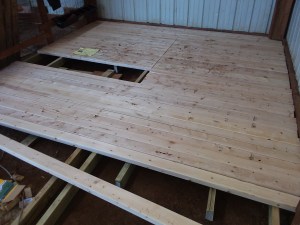 We started by running those 16 foot long pressure-treated 2x4s down the long side of the pen. We installed them a few inches above the dirt floor so there will be some measure of airflow underneath. Once those were securely in place, we cut two 2x4s about 4 feet long, and propped them up so they were parallel and level with the runners. On these 2x4s we installed the 2×4 decking. Once all the decking was installed we removed the blocks propping them up so that the decking is what held the weight whole pallet. We did it this way because we know we will need to get access to the dirt floor occasionally to clean it. Lift up a pallet, and there’s the old dirt floor.
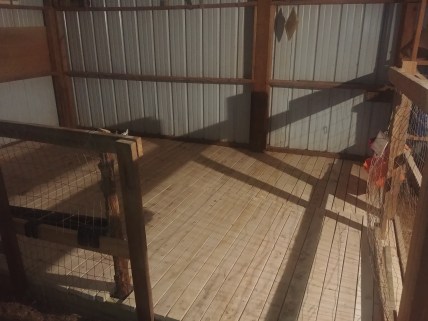 It only took one night to realize that I hadn’t put enough space between the deck boards. The next morning the poop was everywhere, including being stuck to the sheep. I had to go back and take out every single screw and reattach the boards with enough space between them to allow the “garden gold” to fall to the ground below. It’s been a couple of weeks now since finishing this project and so far it appears to be just what we’ve needed all this time.
Whirldworks Farm Buttermilk Pecan Pancakes
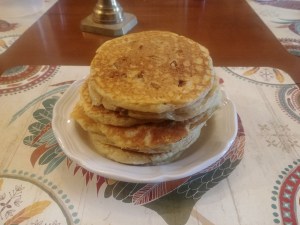 Six days of the week, breakfast is something of a hurried affair, but we make every attempt to slow things down on Saturday mornings. It is a special time when we can spend some time working together to make this tasty treat and then share them as a family at the table. Buttermilk Pecan Pancakes have become our family favorite!
Dry Ingredients
- 3 Cups Flour
- 1/2 Cup Crushed or chopped precans
- 2 Tsp Baking Soda
- 2 Tsp Baking Powder
- 1 Tsp Salt
- 1 Tbsp Sugar
Wet Ingredients
- 2 Cups Buttermilk
- 2 1/2 Cups Milk
- 1/2 Cup Melted Butter
- 2 Egg Yoks
- 2 Egg Whites – Stiff
Mixing Instructions:
- Mix all of the wet ingredients and dry ingredients in separate bowls, but hold the stiff egg whites aside. Once mixed, combine the two bowls together and then fold in the stiff egg whites. Stir until well combined. If the mixture appears too thick, add milk at 1/2 cup increments.
- Set bowl aside for about 10 minutes and make sure your griddle is lightly oiled and heating (we typically use an electric griddle set at 350 degrees).
- Pour enough batter onto the griddle to make a circle of 4-5 inches. Repeat until your griddle is full of pancake goodness.
- When bubbles appear on the surface and the edges begin to appear brown, flip the pancakes over.
- Cook for an additional 3-5 minutes (depending on your griddle and preference)
- Remove the pancakes from the griddle and place as many as you can eat on a plate.
- Pour your favorite syrup over your pancakes and enjoy!
Free Resource – Egg Collection Log
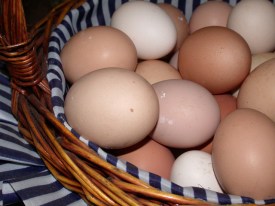 Chickens were among the first of our animals on the farm, given as a gift from some dear friends. Over the past three years we very much enjoy keeping chickens and eating our very own farm-fresh eggs. One thing is for sure though! Their laying cycles are both intriguing and frustrating.
FREE RESOURCE – EGG COLLECTION LOG

Top Ten gifts for the homestead husband
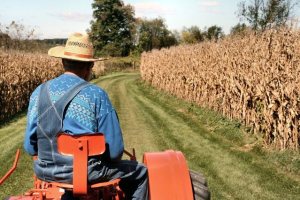 Working on the homestead is most often less of a chore and more of a blessing. To know that every ounce of work you put into YOUR place is yours to keep. Add to that the chance to be outdoors enjoying your little piece of heaven and there is little better enjoyment in life.
When it comes to giving a gift to the man of the homestead, it may seem difficult to know just what he wants or needs. I can tell you from experience that there is plenty of need for new or replacement tools and you shouldn’t worry much about getting him something he already has. When it comes to tools and equipment, nothing lasts forever on the homestead and a backup always, and I mean always, comes in handy.
I could list far more than 10 items on a man’s homestead wish list, but if I truly had to narrow it down to 10 things, these would (and are) on that list.
Cordless Tools
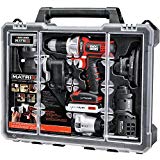
Working on a homestead often involves maintenance in locations too far from your home or other sources of electricity. In many cases I actually prefer powerless hand tools, but there are times when cordless power tools can be very helpful. Repetitve jobs and time constraints make the cordless power tool a handy item to have in your toolbox. I don’t own this particular set, but I do own the corded version of the Black+Decker Matrix and really enjoy the versatility of a variety of attachments.
Chainsaw
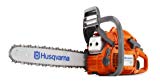
$374.95
Unless your homestead is a sod hut on the vast prairie, a chainsaw is a must have piece of equipment. Brand loyalty is a major factor in choosing your next chainsaw purchase, but beware that when it comes to chainsaws, you really do get what you pay for. I bought a relatively inexpensive brand when we first purchased our land and that chainsaw now sits gathering dust in “forever storage.”
Tool Belt
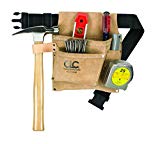
$13.99
There is no counting how many times I’ve run across something that needs fixed or mended while working on something else, only to discover that the tool I really need is back at the house. Carrying a heavy toolbox around the homestead is not a reality I experience, but a well stocked tool belt can reduce time spent going back and forth to the house for a screwdriver or hammer.
Muck Boots
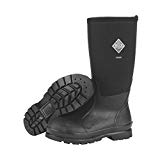
$85.35
It doesn’t take long to realize that muck boots are an absolute essential piece of homestead gear. The very first time your regualar boots get stuck in the mud or you, um, track that mud into the house, and you’ll recognize the need. Muck boots typically slip on and off with ease anyway, so they are extremely convenient when you have to run outside for a second, or if you have a day’s work ahead of you.
Overalls or Coveralls
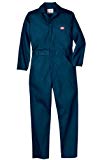
$53.82
Homesteading is a dirty business. I can’t think of a single chore that doesn’t somehow mar my clothes with a spot of mud here or a stain of something there. Not to mention working in the woods surrounded by poision ivy. The difference between overalls and coveralls is pretty much a personal preference, but if I am going out to do something that I know for sure is going to be a dirty job, I prefer coveralls.
Grill/Smoker
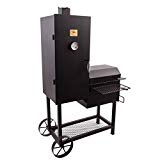
$379.99
Okay, here is a choice that can cause hours of discussion, especially here in Texas. Every Texas homesteader knows something about barbecue and a piece of land without some sort of grill or smoker is wasted space.
Fixed Blade Knife
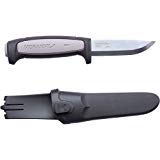
$15.67
A homesteader without a good strong knife is like a zebra without stripes. Pocket knives are a good tool to carry, but I have found them to be too small or awkward for some of the jobs I need a knife for. There are any number of quality fixed blade knives out there today, but I really love my Morakniv Craftline. It’s bigger than my pocket knives, but smaller than a machete and is a very strong and versatile tool.
Headlamp
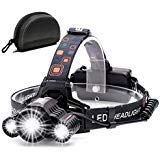
$25.99
The stars may be bright deep in the heart of Texas, but they typically are not bright enough to work by. They are certainly not bright enough to find a stray animal or to tell if that noise in the bushes is an armadillo or a skunk. Flashlights are handy, but I have found that when I am outside after the sun goes down, I usually need both hands free. Modern headlamps are bright and last much longer than any nighttime job I have needed them for.
Hat

$11.99
I have no idea where you live, but on our homestead we never go outside in the summer without a good hat on our head. The sun can do a lot of damage in a short amount of time and your scalp is one of the last places you want to experience a sever sunburn. Sure the cowboy hat is king in Texas, but I have found my cowboy hats to be in the way or get knocked off easily when I’m working in the woods. I have found that I very much prefer a vented bucket hat when I’m out on our homestead.
Gloves
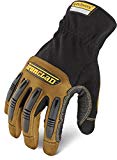
$23.74
Gloves are everywhere and every homesteader has a pile of them somewhere. But chances are that one of this pair is missing, one of that pair has a dozen holes, and that pair, well, what is that smell? Leather gloves are great during the winter, but during the summer when it’s 100 degrees outside, I don’t know about you, but I need a glove that can breathe AND handle whatever I throw at it. Having more pairs of gloves than you think a person needs is never a bad idea.
So here’s my list. Would you have a different list? I’d love to know what is on your Top 10 gift list for men on the homestead!
This post will floor you! Part One
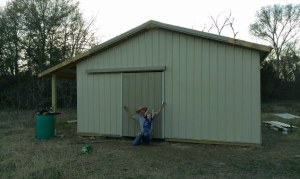 Our barn was the very first structure we built as we knew there was a need to store tools and equipment long before we called the land our home. (You can read a little more about our barn adventure here, here, and here).
When I set the very first posts we were in the middle of quite a drought and the entire homestead was covered in very tall grass. Because of this, I had no idea I was actually building our barn in a pretty poor location. When the rain returned, I soon discovered our building area was actually in a low spot and collected quite a bit of water. No sooner had I built the barn, I was digging a drainage ditch around the perimeter and installing french drains, gravel and rocks to divert the rainwater.
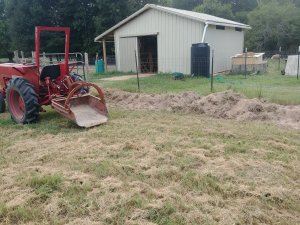 This worked fairly well until our home was built and the road base from the house to the barn was laid. A great volume of water would drain from the house gutters, follow the nice new graded plain to the new road, take a right turn and follow the road straight to the front door of the barn. Again I was employed in digging trenches, but no matter what I did, the barn floor would experience varying degrees of drainage. The result was a wet, muddy floor that we knew would be unsuitable for our future animals.
 We read on the subject and talked to people in the area and settled on the same kind of red dirt/sand that is typically seen in arenas. The wet mud problem vanished, but once our sheep moved in, it didn’t take long to realize it was turning them orange! After our first season on the farm, I dug out as much of the red dirt as I could and we replaced it a dump truck load of something similar to play sand.
This seemed to solve both the problem with mud and orange sheep, but cleaning a twenty by twenty foot litter box with a rake and mud shovel (sifter) every day became an every day chore. There really didn’t seem to be any way around this so for the past two years, rake, sift, dump has been a daily routine.
Then came our recent discovery at the fiber mill. Even after washing our wool fleece twice, the mill owner showed us a pile of fine grit and sand that clogged their machinery and caused a slow-down when processing our wool. The owner has sheep on ground not too different from ours and we asked how they reduced the problem in their flock. The answer was a wooden floor in their barn.
This solution sounded reasonable enough, but as with all suggestions and ideas, we took it into consideration and researched it. Turns out, plenty of other people have used this same solution. How is it that we never came upon this idea before?
The decision was made and our sheep were going to get a Texas-sized dance floor!
Until next time…..
2018 Wool Summary and Availability
Whirld Works Farm Debouillet Sheep Wool
Season 2018
Sheared by Katie
2018 was our second shearing season and we took the opportunity to learn more about our wool. We sent off samples for each animal and were thrilled with the results.
Our wool falls into the very fine category! Here are the results:
- Winton: 18.6 microns /2.95 inch length
- Wade: 16.7 microns /3.14 inch length
- Wynonna: 18.8 microns /2.75 inch length
- Wanda 18.9 microns /3.54 inch length
- Wendy 18.5 microns and /3.54 inch length
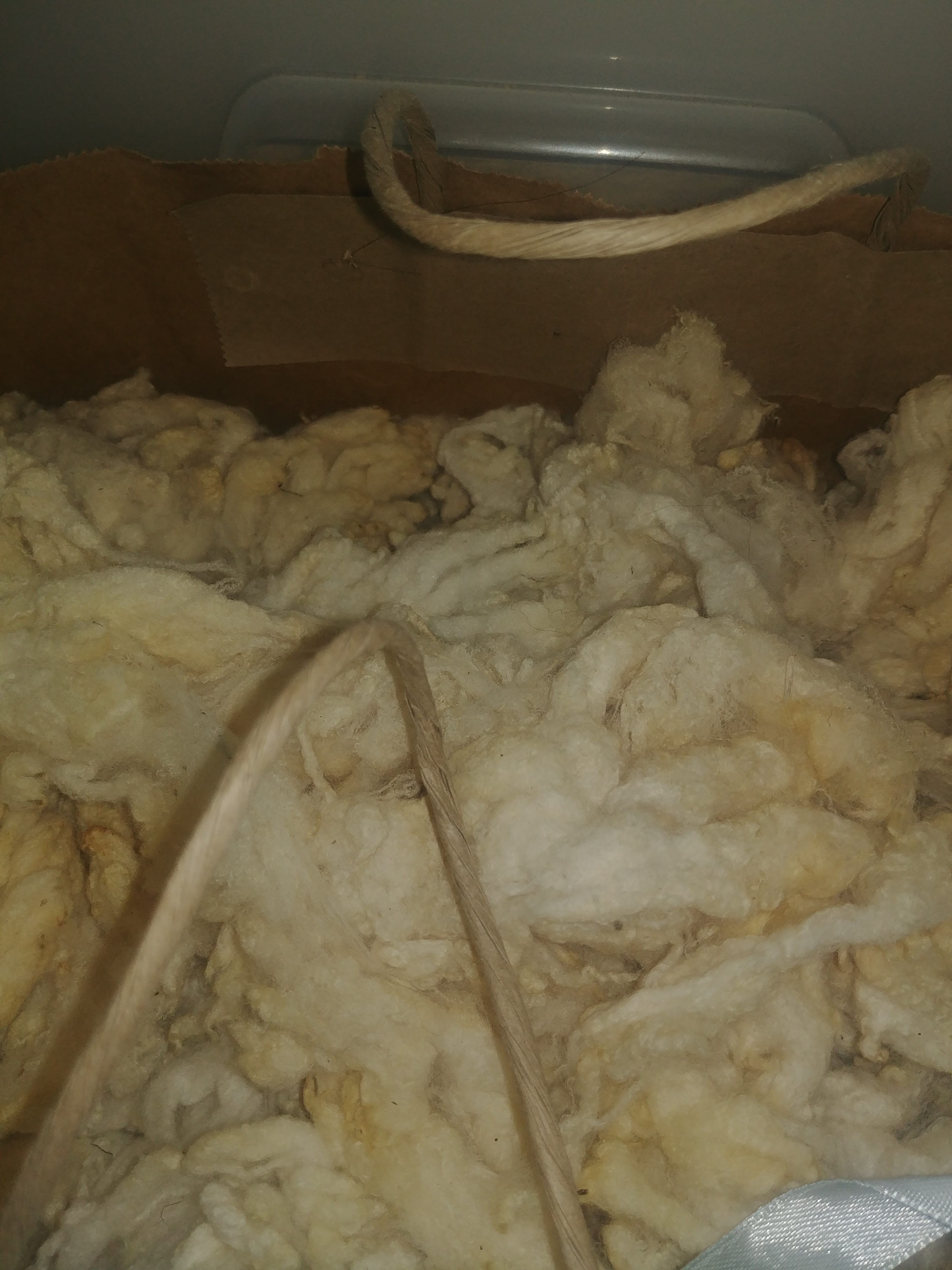 Rather than trying to process the wool ourselves this year, we had it processed by the great folks at Independence Wool. We did a considerable amount of skirting the wool by hand prior to handing it off and were rewarded with the report from the mill that our wool was not considered to be exceptionally dirty with seeds and other “vegetable matter”.
We did learn that we should probably let the wool grow a little longer before the next shearing as well as add a little more than our usual amount of supplemental feed.
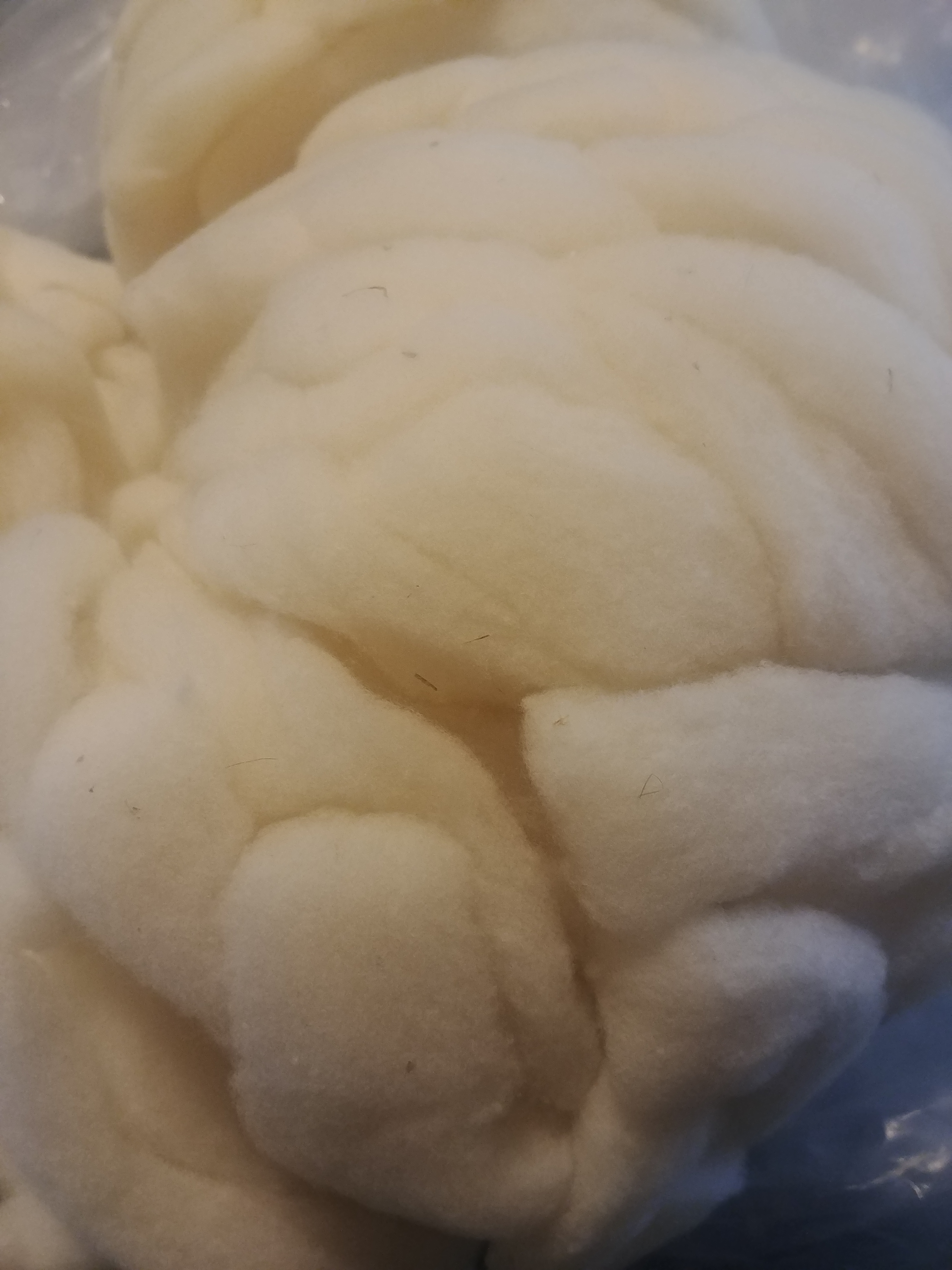 Our final lesson from the mill was that even with all our precautions and care for the sheep, their sleeping on our sand floor in the barn creates a process problem for the mill. They showed us a pile of fine grit and sand that came out of the wool (after washing) in the carding machine. It is too late in the season for us to make changes that will fix this for our 2019 wool, but there are things already in the works to help with that issue (Stay tuned!).
Our shearer did a great job and as a result, this years wool has far less “slubs” or lint and was cut much more evenly. It is processed into semi worsted roving and the prices reflect the lengths and micron count.
What is worsted or semi-worsted roving? Here’s an article to help understand the difference:
http://www.porpoisefur.com/blog/2008/10/fiber-friday-worsted-vs-semi-worsted.html
** Happy spinning! **
Purchase 2018 Stock Wool
| Wade (16.7 microns /3.14 inch length): $4 per Ounce |  |
| Wendy (18.5 microns and /3.54 inch length): $4 per ounce | |
| Winton (18.6 microns /2.95 inch length): $3.50 per ounce | |
| Wynonna (18.8 microns /2.75 inch length): $3.50 per ounce | |
| Wanda (18.9 microns /3.54 inch length): $4.00 per ounce | |
A new set of twins arrived today!
When it comes to our momma sheep and their babies, there appears to be a trend developing at Whirldworks Farm. It would appear that cold fronts that blow in on Sundays bring out the lambs! Last year pretty much all the babies came to us under these conditions.
Last weekend a cold front blew in Saturday night and Sunday morning Wanda was standing tall and proud with her new baby, Ansel.
This weekend, a cold front blew in again on Saturday and this morning we found Wendy standing even more proud with her twin babies, Ari (boy) and Ariel (girl). It is interesting to note that last year Wendy had a set of twins ( a boy and a girl) as well. All our other ewes, so far, have had singles. Time will tell what other lambs are in store for us this year, but needless to say, it is a very exciting part of our year.
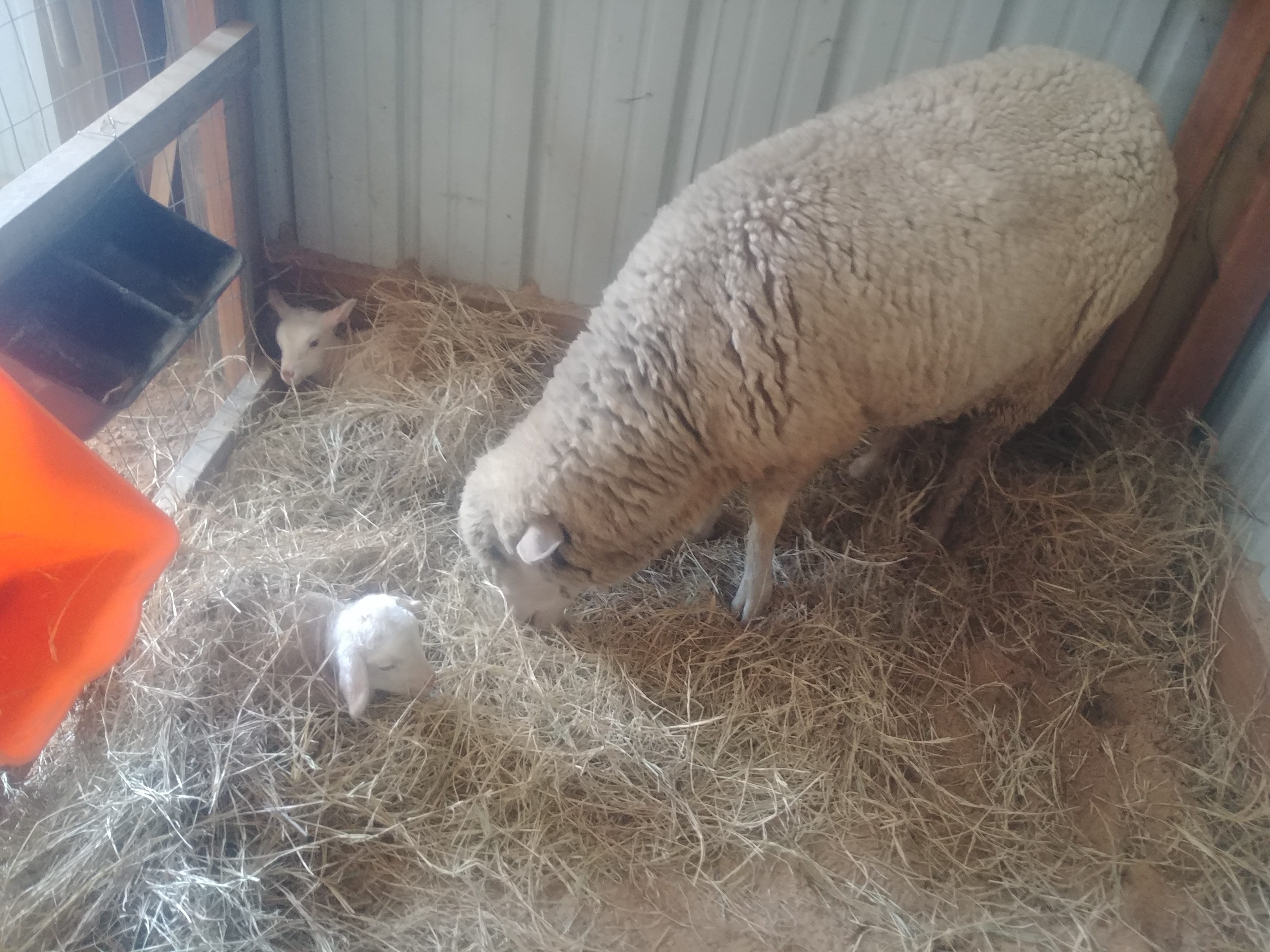
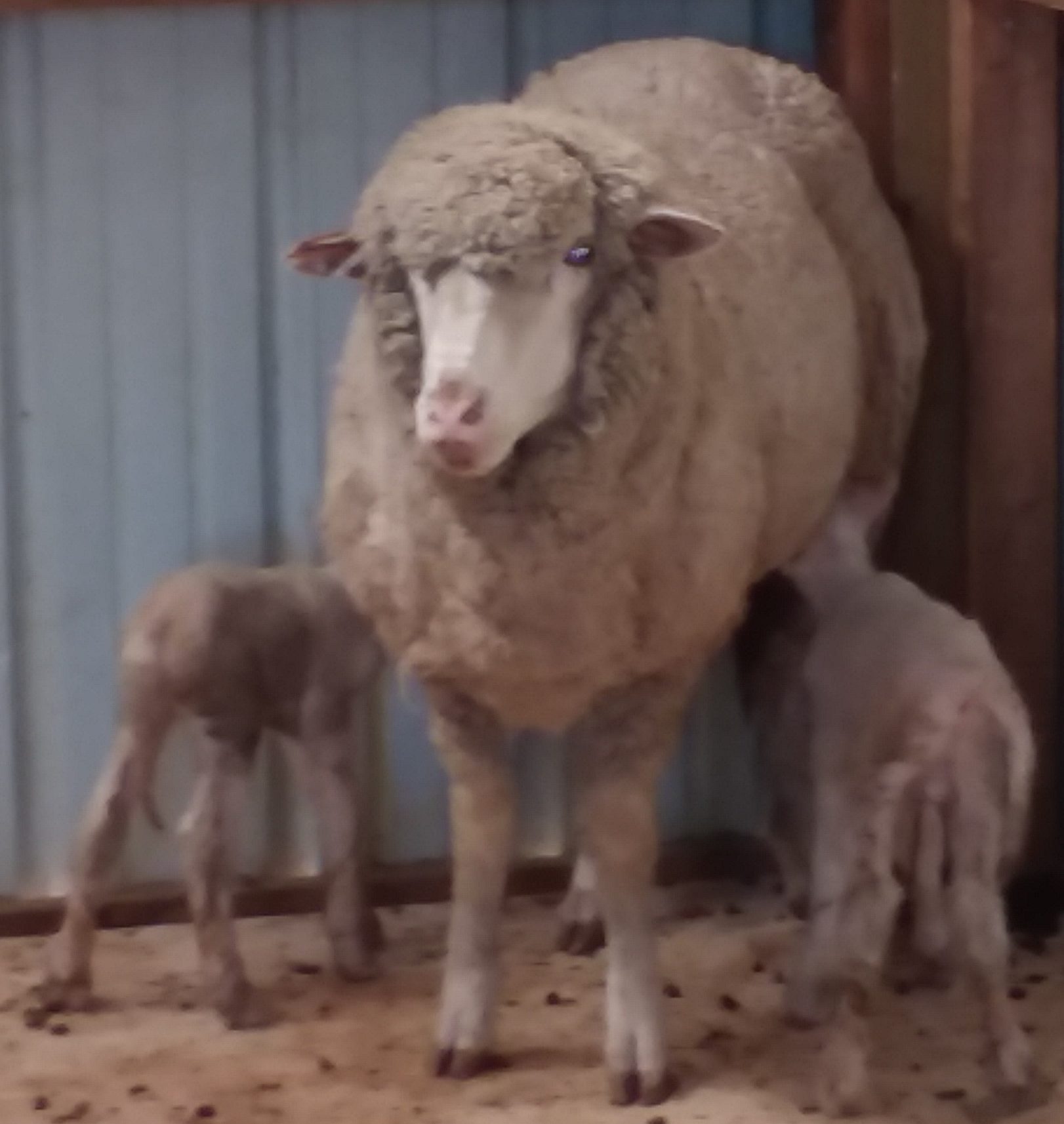
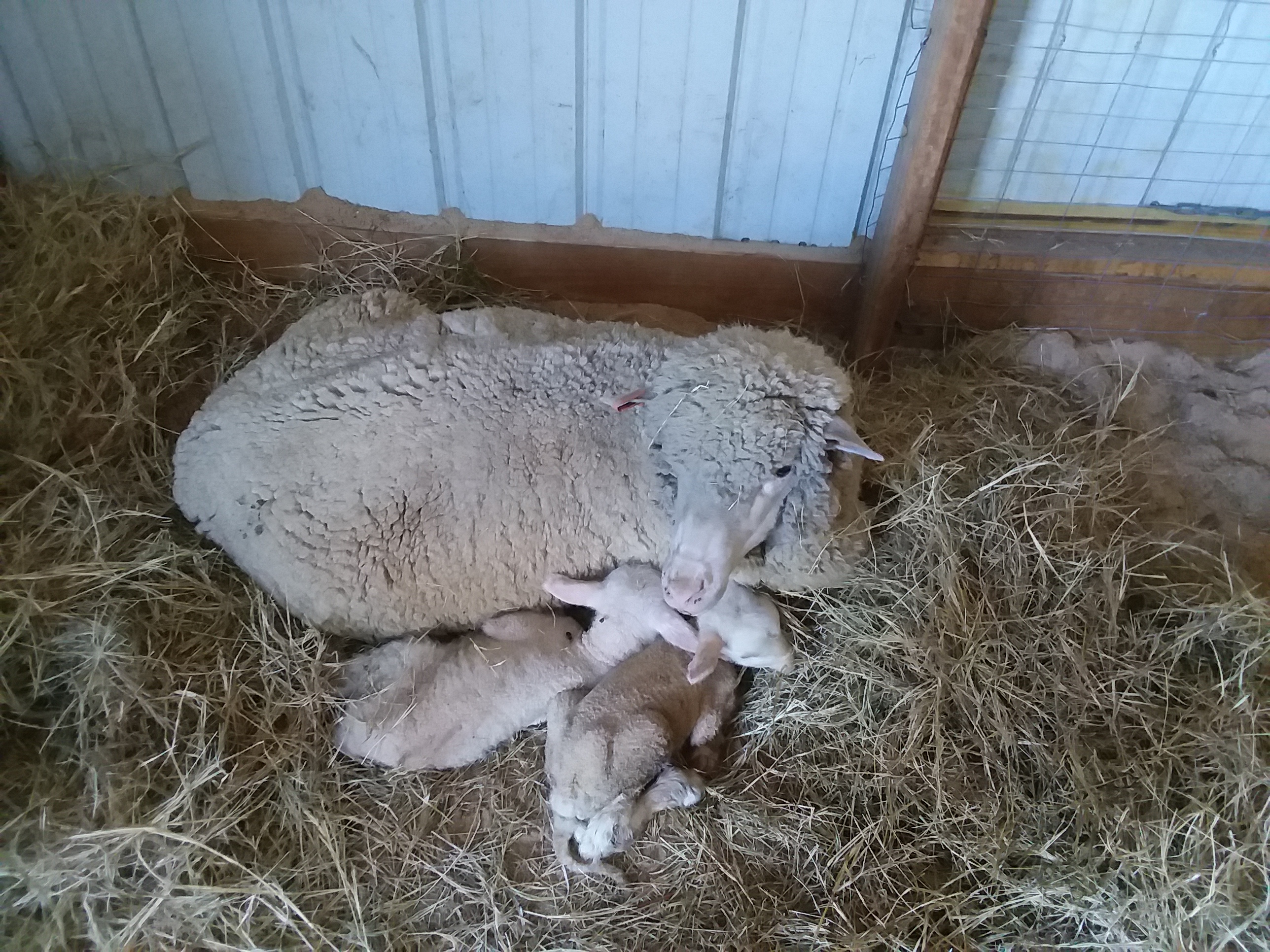
Ari and Ariel
2017 Wool Summary and Availability
Whirl’d Works Farm Debouillet Sheep Wool
Season 2017
We found this wool to be very soft and it has a great crimp. 2017 was our first shearing season and we learned allot from it. We hired a wonderful shearer for our first fleeces, but learned a valuable lesson in the process. Our shearer made the sheep look show-ready, but unfortunately the result was lesser quality fleece. Because of the shearing process in 2017, we ended up with a lot of second cuts in this season’s wool and the staple length was rather short, due to the way it was sheared. No fault of the shearer, we just didn’t know what we were expecting (or needing for that matter).
We also learned that washing the wool ourselves, by hand, was incredibly labor intensive and left the wool somewhat felted.
In order to put this wool to use we had to open the fibers up again before putting them through the carder, or use a hand carder. We believe a tool called a picker would be helpful in opening up the fibers to make them easier to card.
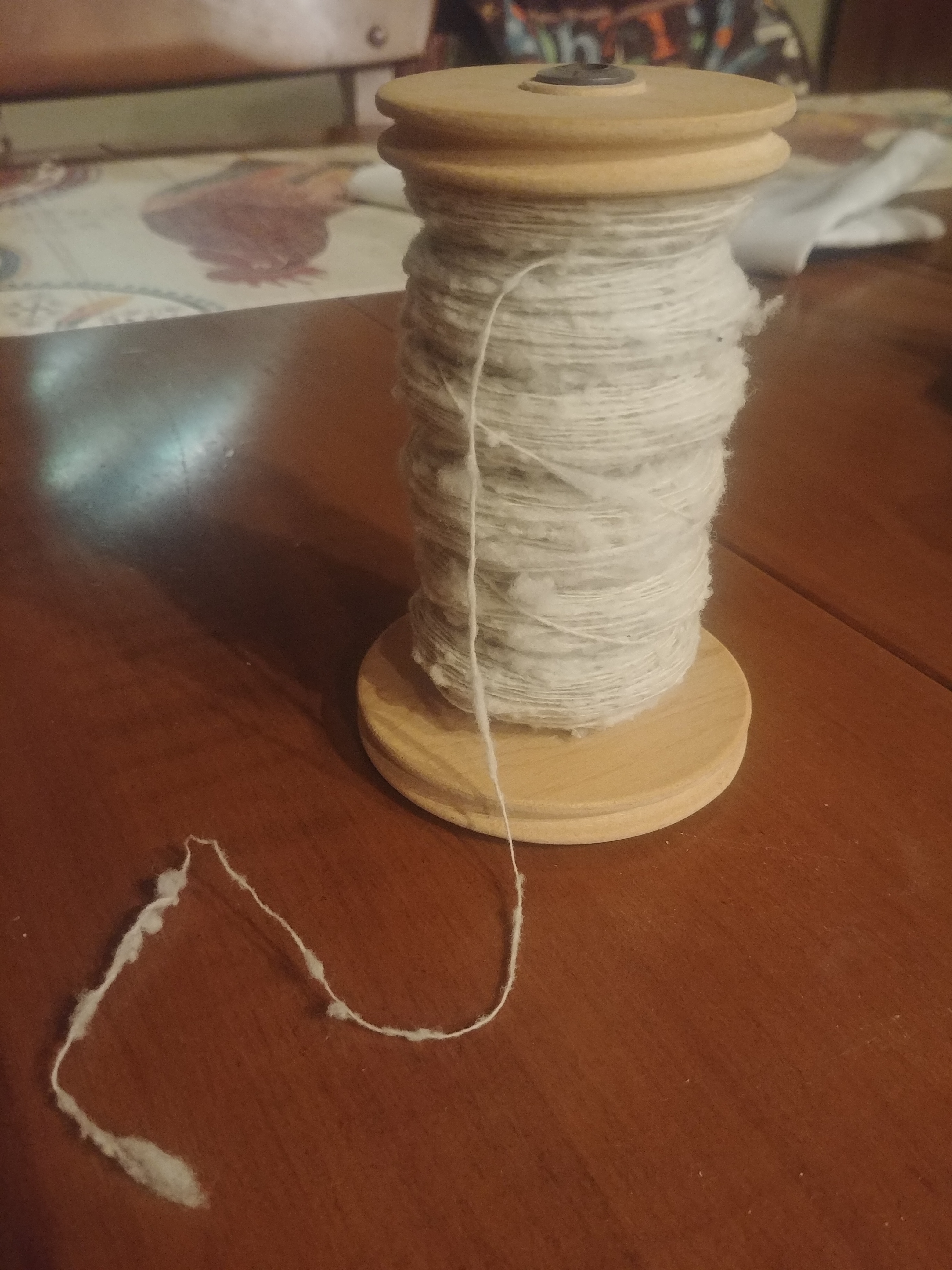 After having manually opened some of the locks (and wads) of felted fiber we were able to card about 5 “rollogs” weighing about 1oz each. This spins into a very bumpy yarn wit h a lot of “slubs” or lint. It has a very “artsy” texture that would make great place mats or other items where a lot of texture is desirable. It is nonetheless very exciting to actually spin wool from our very own sheep.
We have set the price for this wool at only $12 per lb because of the inferior shearing method, and overhandling during the washing phase. It is still a very spin-able wool for a somewhat seasoned spinner and makes a great yarn for certain applications.
*** Not recommended for beginners ***
Purchase 2017 Stock Wool
The price for our 2017 wool is $0.75 per ounce or $12 per pound
Homestead Bloggers

 WhirldWorks Farm
Recent Comments